

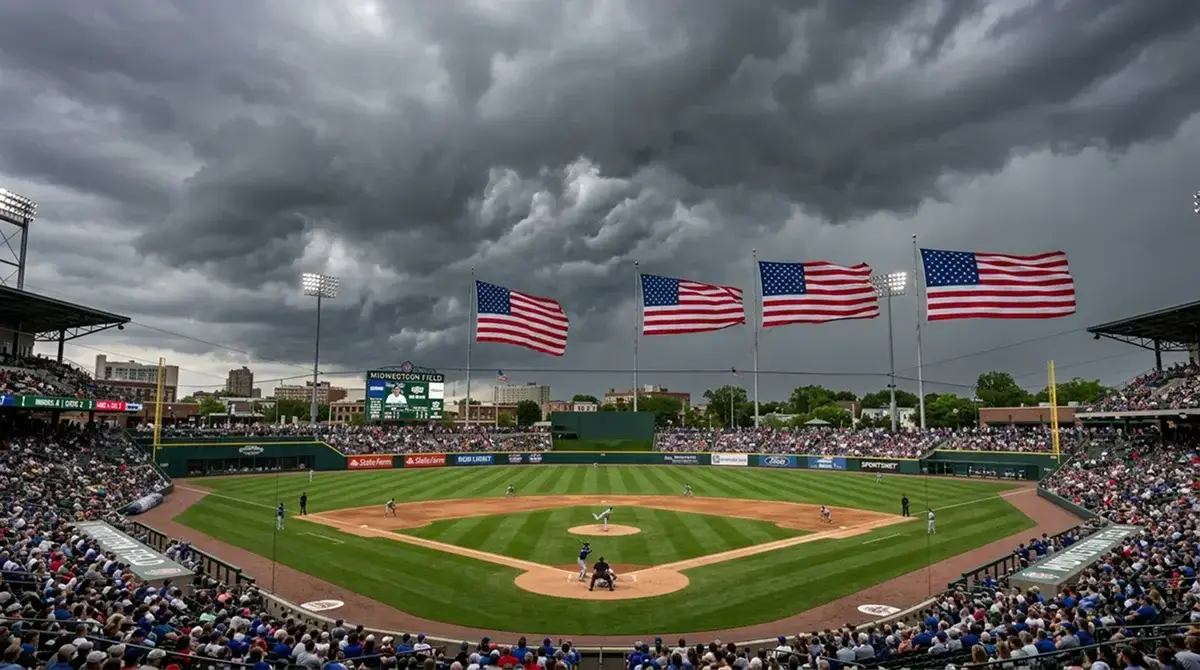
On a warm June evening in 2023, I watched a game at a Midwestern stadium where the wind was blowing straight out to centre field at 18 mph. The posted total was 9.0. It finished 11-8. That nineteen-run explosion wasn’t random — it was physics. Baseball is one of a handful of major sports where weather doesn’t just affect comfort; it directly changes the probability of scoring events. Once I started factoring wind, temperature, and humidity into my handicapping, my totals hit rate improved noticeably.
Predicting Stadium Wind Patterns for MLB Weather Impact on Betting
Not all wind is created equal, and direction matters far more than speed. Wind blowing out toward the outfield — particularly to centre or the power alleys — turns routine fly balls into home runs and pushes warning-track shots over the fence. Even a moderate 10-12 mph breeze blowing out can add half a run to expected scoring. Wind blowing in from centre field does the opposite: it suppresses fly ball distance, keeps the ball in the park, and pushes the game toward the under.
Crosswinds are more subtle but still relevant. A strong crosswind from left to right doesn’t have the same dramatic effect on home run probability, but it can create chaos for outfielders tracking fly balls and make pitchers’ breaking balls behave differently than usual. I weight crosswind effects at about 25% of the value I assign to direct outward or inward wind.
The trap that catches casual bettors is checking the general city forecast rather than the ballpark-specific conditions. A weather report might say winds of 15 mph from the south, but the stadium’s orientation determines whether “south” means blowing out to centre, blowing in from centre, or blowing across the field. I check park orientation charts and overlay them with wind direction before every totals bet. With 2,430 regular-season games generating daily opportunities, this five-minute step compounds into a meaningful edge over a full season.
Temperature and Humidity
I used to dismiss temperature as a minor factor until I ran the numbers on a full season of data. Games played in temperatures above 27°C (80°F) averaged roughly 0.3 more total runs than games played below 13°C (55°F). That’s not dramatic on a single-game basis, but when the bookmaker has set the total at 8.5 and you believe temperature pushes the true expected total to 8.8, you’ve found a marginal over with value.
The physics are straightforward. Warm air is less dense than cold air, which means the baseball travels further when hit in heat. A fly ball that reaches the warning track on a cold April night might clear the fence on a hot July evening. This effect is most pronounced on batted balls in the 95-105 mph exit velocity range — the ones that are borderline home runs — which happen to be the exact events that swing totals outcomes.
Humidity adds a second layer. Moist air is actually less dense than dry air (water molecules are lighter than nitrogen and oxygen molecules), so high humidity further assists ball flight. The combination of heat and humidity in summer games at East Coast and Midwest stadiums creates peak scoring conditions. Conversely, cold, dry April and September nights suppress offence.
One nuance worth noting: domed and retractable-roof stadiums eliminate weather from the equation entirely when the roof is closed. There are currently several MLB venues with roofs, and they produce the most predictable scoring environments in the league. When a game is played under a closed roof, I remove weather from my analysis and focus purely on pitching, lineup, and park dimensions.
Weather Research Tools for UK Bettors
The challenge for UK-based bettors is accessing ballpark-specific weather data rather than general city forecasts. Several sports analytics sites offer pre-game weather dashboards that show wind speed, direction, temperature, and humidity for each stadium on the day’s slate. These are freely accessible from the UK and typically update within two to three hours of first pitch.
My daily routine is straightforward. I check the park factors for each game on the slate, then overlay the weather data to see which games have conditions that amplify or suppress scoring beyond the park’s baseline. A hitter-friendly park with wind blowing out and temperatures above 27°C is a totals over playground. A pitcher-friendly park with wind blowing in on a cold night is a totals under haven. The intersection of park and weather creates the strongest signals.
Timing matters. Weather forecasts become significantly more accurate within six hours of the event. For East Coast MLB games starting at midnight BST, the optimal weather check window is around 18:00-19:00 UK time — six hours before first pitch. For West Coast games starting at 03:00 BST, check around 21:00. I set reminders on my phone to avoid relying on stale morning forecasts that may have shifted by evening.
One final point on rain. Rain delays and postponements are the enemy of pre-game bets in baseball. If a game is delayed by rain and resumes hours later with cold, wet conditions, scoring patterns can shift unpredictably. More importantly, if a game is postponed entirely, settlement rules vary by bookmaker — some void all bets, others treat it as a push. I avoid betting on games where there’s a meaningful probability of precipitation, particularly early in the season when cold-weather rain delays are most common. April and May slates in northern US cities are especially prone to rain-related disruptions, and with 2,430 games in a season, there’s no shortage of cleaner opportunities on any given night.
