

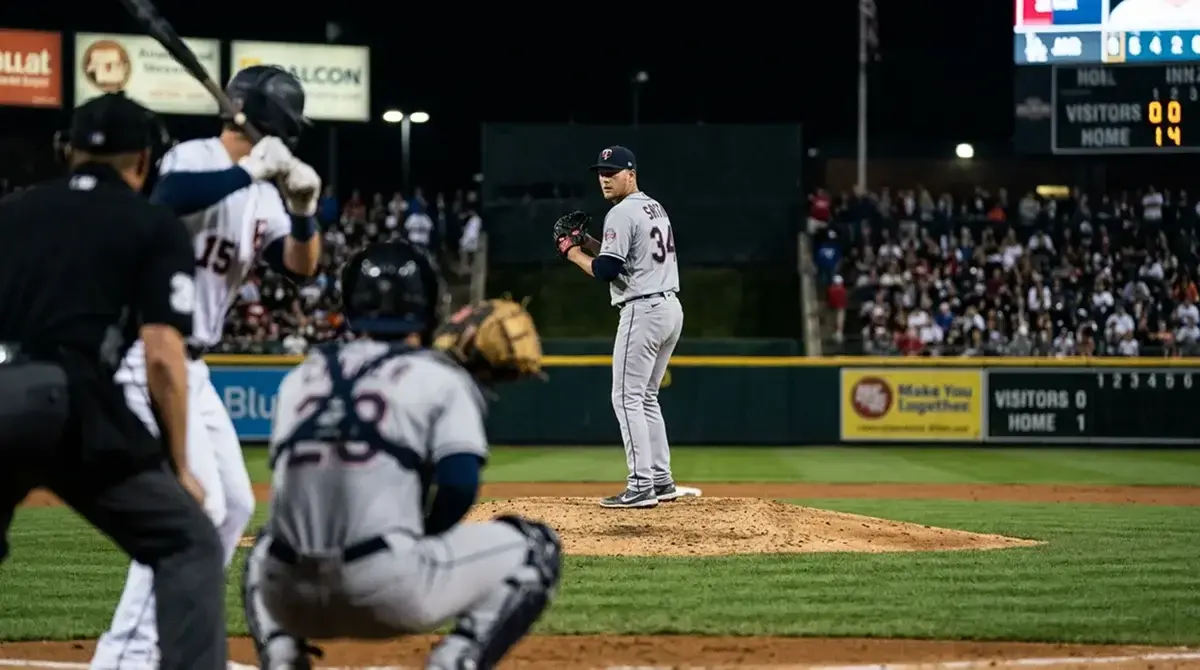
No single player in any sport moves a betting line the way a starting pitcher moves an MLB line. Not a football goalkeeper, not a tennis server, not a cricket opening bowler. When a team’s ace is scratched from a start and replaced by a journeyman from the bullpen, the moneyline can shift by 30 or 40 cents in decimal odds — the equivalent of a Premier League favourite suddenly becoming a coin-flip game. After nine years of analysing these markets, I can tell you that pitcher matchup analysis is not one factor among many. It’s the factor.
Key Pitcher Metrics for Betting
First 5 innings betting is one of the best opportunities to find value in baseball precisely because it isolates the starter from everything else. But to exploit that, you need to understand what the numbers actually tell you — not just recite them.
ERA (earned run average) is the stat everyone knows: earned runs allowed per nine innings. It’s useful as a headline number but deeply flawed for betting because it includes luck and defensive performance. A pitcher can have a 4.50 ERA while pitching brilliantly if his defence keeps botching routine plays behind him.
FIP (fielding independent pitching) strips out the defence and focuses on what the pitcher controls: strikeouts, walks, hit batters, and home runs. It’s a better predictor of future performance than ERA. When a pitcher’s ERA is 4.20 but his FIP is 3.10, the market is probably overpricing the opposition — that pitcher has been unlucky, and regression toward his FIP is coming.
xERA (expected ERA) uses Statcast data — exit velocity and launch angle on every batted ball — to estimate what a pitcher’s ERA should be based on the quality of contact he allows. It’s the most predictive single metric for projecting future performance. I prioritise xERA over ERA in every matchup analysis because it tells me how well a pitcher is actually pitching, not just what the scoreboard says.
WHIP (walks plus hits per inning pitched) measures baserunner traffic. A low WHIP means fewer runners, which means fewer scoring opportunities. K/9 (strikeouts per nine innings) and BB/9 (walks per nine) complete the picture — high strikeouts and low walks indicate a pitcher who controls the zone and misses bats. That combination is kryptonite for opposing lineups and gold for bettors.
Matchup Analysis Process: Pitcher vs. Lineup
Knowing a pitcher’s overall stats is step one. Step two — and this is where the real edge lives — is understanding how those stats change against specific types of lineups.
Platoon splits are the most actionable variable. Most pitchers perform differently against left-handed batters than right-handed batters. A right-handed pitcher might have a 2.80 ERA against righties but 4.60 against lefties. If tonight’s opposing lineup stacks four left-handed bats in the top five slots, that pitcher’s effective quality drops sharply from what his headline numbers suggest. The average favourite line sits at roughly 1.70 decimal — how the starter performs against this specific lineup, not against a generic one, determines whether that price represents value or a trap.
Home/away splits add another layer. Some pitchers thrive at home and struggle on the road. Others are road warriors whose numbers actually improve away from their home park. I check the last 15-20 starts split by home and away before weighting a pitcher’s projected performance for the day. A two-run ERA gap between home and road starts is not unusual and can meaningfully shift the implied probability of a game.
Recent form deserves more weight than season-long numbers, especially early in the season. A pitcher who’s been dominant over his last five starts is in a different gear than his April-to-September average suggests. I use a 5-start rolling window for matchup analysis, cross-referenced against the season numbers to make sure I’m not overreacting to a small sample that happens to be hot.
The Listed Pitcher Rule
This is the single most important rule UK bettors need to understand about MLB wagering, and getting it wrong can cost you money. The listed pitcher rule determines what happens to your bet if the scheduled starting pitcher is replaced before the game begins.
Most UK bookmakers offer MLB bets with “listed pitchers” — meaning your bet is only valid if both listed starters actually start the game. If either pitcher is scratched, the bet is voided and your stake returned. This protects you from a situation where you’ve backed a team specifically because of their ace, only for a last-minute injury to drop in a replacement who shifts the line dramatically.
Some bookmakers offer “action” bets instead, which stand regardless of pitcher changes. I strongly recommend confirming which format your bookmaker uses before placing any MLB bet. On the rare occasion I’ve accidentally placed an action bet and the starter changed, the line moved 15-20 cents against me — a gap that wiped out any edge I thought I had.
Pitcher changes are rarer than you might expect — they affect perhaps 5-8% of scheduled starts across a season. But they cluster around certain periods: early April when spring training injuries linger, the All-Star break when workload management intensifies, and September when teams manage pitch counts ahead of the playoffs. Being aware of these windows helps you anticipate when a listed pitcher voiding is most likely, so you’re not caught off guard when a bet disappears from your slip.
Roughly 30% of all MLB games are decided by a single run. In those margin games, the quality difference between a team’s scheduled ace and an emergency fill-in can be the entire margin. The listed pitcher rule exists because the market recognises how disproportionately a single player — the starter — influences the outcome. No other sport has an equivalent mechanism, because no other sport has a single position with this much leverage over the result. Understanding the advanced metrics behind pitcher evaluation turns this from guesswork into a structured, repeatable process.
