

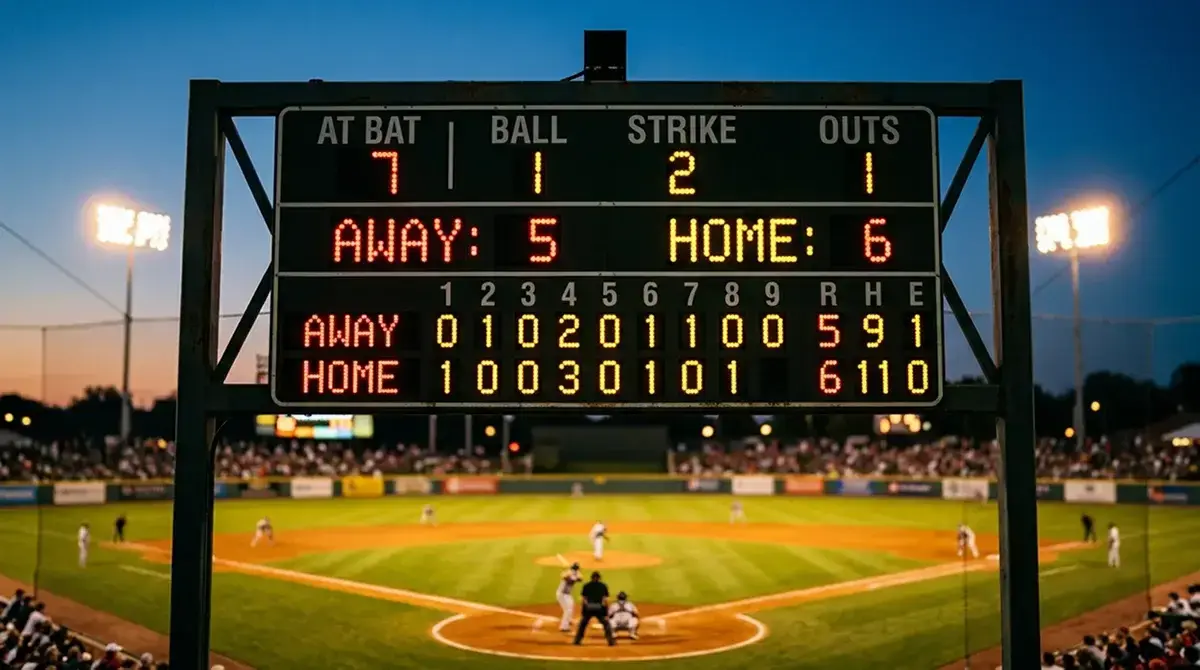
I placed my first run line bet in 2018 and lost it by the most painful margin imaginable — a walkoff solo home run in the bottom of the ninth. The favourite I’d backed at -1.5 won the game 4-3, and I collected nothing. That single bet taught me more about the run line than any guide ever could: roughly 30% of all MLB games finish with a one-run margin, and that number shapes every decision you make on this market.
If you’ve come from football betting, think of the run line as baseball’s answer to the Asian handicap. The standard line is fixed at ±1.5 runs rather than shifting with form, and that quirk creates a pricing dynamic you won’t find anywhere else in sport. This guide breaks down the mechanics, shows you when the run line beats a straight moneyline, and covers the alternative lines UK bookmakers occasionally offer.
Calculating Handicaps in the MLB Run Line Market
A packed Saturday slate and you’re staring at two options for the same game. The moneyline favourite sits at 1.55 decimal, the underdog at 2.60. Straightforward enough — pick a winner. But right next to those prices sits the run line, and it works like this: the favourite must win by two or more runs (-1.5), while the underdog can lose by one run and still “cover” (+1.5). It’s a binary handicap applied to the final score.
Here’s a worked example in decimal odds. Suppose the Yankees are -1.5 at 2.10 and the Orioles are +1.5 at 1.78. You stake ten pounds on the Yankees run line. If the Yankees win 6-3, you collect 21.00 (10 x 2.10). If they win 4-3, your bet loses — the handicap-adjusted score becomes 2.5-3, and Baltimore covers. On the flip side, a ten-pound bet on the Orioles +1.5 pays 17.80 even if they lose 4-3, because the adjusted score reads 4-4.5 in their favour.
The fixed 1.5-run spread is what separates baseball from football handicapping. In the Premier League, the handicap moves from -0.5 to -1.0 to -1.5 depending on the mismatch. In MLB, -1.5 is the standard run line for every single game. Bookmakers adjust value through the price, not the spread — so a dominant favourite might be -1.5 at 1.45, while a moderate favourite could be -1.5 at 2.20. Learning to read that price is the real skill.
One detail UK punters sometimes miss: the run line applies to the full nine innings plus extras. If a game goes to the tenth inning and the favourite wins 5-4, the -1.5 bet still loses. Extra innings don’t reset the handicap. Keep that in mind during those late-night sessions when games stretch past midnight BST.
There’s another subtlety worth knowing. Because the home team doesn’t bat in the bottom of the ninth if they’re already ahead, a team leading 3-1 entering the ninth that closes out the game wins by exactly two runs — covering -1.5 cleanly. But if that same home team is ahead 4-2 and allows a run in the top of the ninth to make it 4-3, they still win but no longer cover. The bottom of the ninth never happens, so they can’t pad the margin. That kind of scenario plays out more often than you’d think, and it’s the main reason I always check the bullpen’s late-inning numbers before touching the run line.
Run Line vs. Moneyline: When to Choose Each
Last September I tracked every game where the moneyline favourite was priced at 1.35 or shorter — roughly -286 American or worse. Over a three-week sample, those heavy favourites won about 73% of their games outright, but only covered the -1.5 run line around 55% of the time. The moneyline paid too little to be interesting; the run line offered genuine value at those inflated win rates.
That’s the core trade-off. MLB favourites win approximately 57.5% of all games, and the average favourite line sits around 1.70 decimal. At that middling price, the moneyline already carries a fair margin. Backing -1.5 at a longer price — say 2.05 or 2.10 — only makes sense if you believe the favourite’s win probability exceeds the implied probability by enough to offset the games decided by a single run.
Here’s when I lean toward the run line. First, when a dominant starter faces a weak-hitting lineup — an ace pitching against a bottom-five offence creates a reasonable expectation of a multi-run victory. Second, when the favourite’s bullpen ranks in the top five by ERA. Close games get decided in the seventh, eighth and ninth innings, and an elite bullpen preserves leads rather than bleeding them to one-run margins. Third, when the moneyline is so short (below 1.40) that the return barely justifies the risk. The run line stretches that value considerably.
Conversely, I take the moneyline when there’s no clear pitching mismatch, when both bullpens sit around league average, or when the game takes place in a hitter-friendly park where scoring becomes volatile. A 7-6 game and a 2-1 game both count as moneyline wins; only one of them covers the run line.
Alternative Run Lines
Beyond the standard ±1.5, some UK bookmakers offer alternative run lines: ±2.5, ±3.5, even ±4.5 on occasion. I use these sparingly, but they have their moments. A -2.5 line on a heavy favourite can pay around 2.80-3.20 decimal, which starts to look attractive when a front-line starter faces a rebuilding squad with a bullpen in disarray.
The maths is straightforward. Each additional run of handicap roughly doubles the risk. The league’s 2,430 regular-season games produce enough data to show that favourites win by three or more runs in perhaps 30-35% of their victories. That’s a meaningful drop from the 55-60% that covers -1.5, so the price has to compensate handsomely. If it doesn’t, you’re paying for excitement rather than value.
On the underdog side, +2.5 is genuinely interesting. A team getting 2.5 runs of handicap only needs to keep the game within two runs — or win outright — to cash the bet. For UK punters who like the safety net of the draw in football, the +2.5 underdog run line is the closest equivalent: you’re backing a team not to be blown out, rather than picking an outright winner.
Availability varies across the market. The larger UK operators tend to list alternative run lines for marquee MLB games — Sunday Night Baseball, rivalry matchups, playoff fixtures. For a random Tuesday game between two mid-table teams, you might only see the standard ±1.5. Check your bookmaker’s baseball section early in the day, because alternative lines sometimes appear closer to first pitch once the market firms up.
